A dial number belongs to a particular grinder
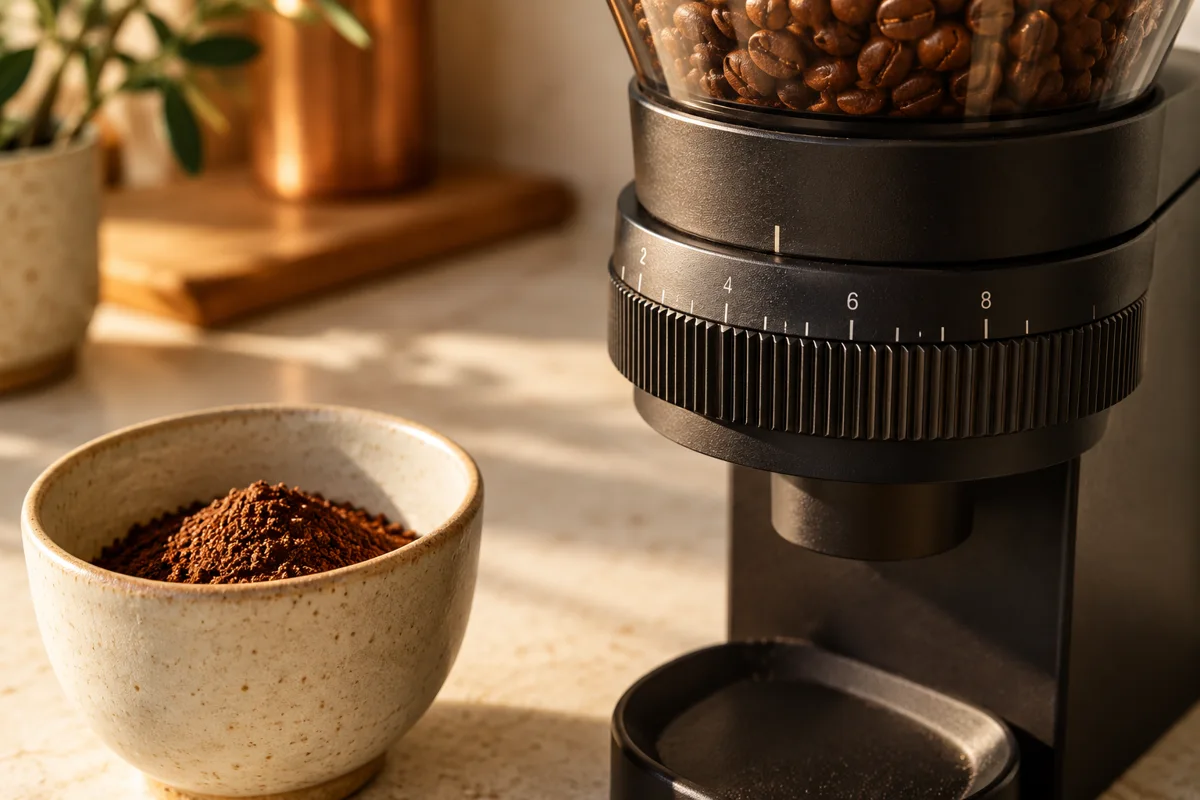
A grind-setting number has meaning within a particular machine and adjustment system. It is not a universal unit that can be copied between brands or models. Start with the maker’s manual, identify the supported brewing range and follow its directions for making adjustments. Even similarly named versions can use different ranges or mechanisms.
Before changing the dial, identify which control changes the grind and which controls dose or operating time. Keep those settings separate in your notes. A number on a grind dial is a model reference rather than a calibrated particle-size measurement, and a longer operating time is not itself an instruction to change the grinding gap.
Know what the adjustment changes
Baratza describes stepped systems as having defined adjustment positions and contrasts them with stepless adjustment. That distinction helps explain how a setting can be recorded, but it does not establish which system or model you should buy. Read the explanation for the exact product you have.
Record a marked number, click position or other repeatable reference in the form the manufacturer uses. Do not force an adjustment beyond a stop or change the procedure because a different grinder’s video appears easier. Instructions about an empty hopper or a running motor are model-specific.
Choose one brewer and one baseline
Make a baseline note before moving the dial. Include the grinder, the brewer, the coffee dose and the water amount. If the brewer has a recipe or operating guide, keep that with the note. Use its suggested starting point where available, then record what you actually did.
A baseline is a reference for comparison, not a certification of the recipe. A different coffee, replacement burrs or changed equipment can make a previously familiar number behave differently. Write down those changes instead of assuming the old dial number proves the setup is unchanged.
Use a simple adjustment log
Keep each change next to the observation it was meant to explore. This makes it easier to return to a previous attempt without relying on memory.
| Record | Example of the information to keep |
|---|---|
| Setup | Grinder model, brewer and coffee identity |
| Quantities | Dry coffee and brewing-water amounts in stated units |
| Adjustment | Previous position, new position and the maker’s permitted procedure |
| Observation | A clear description of the brew, with other changed variables noted |
Make the next change small enough to understand
When comparing settings, hold the other recorded quantities and procedures steady. If the result is difficult to interpret, check the equipment assembly and the recipe before making several new changes. Use your notes to ask a specific question of the manufacturer, a roaster or a coffee professional. Firehawk’s role is to explain a repeatable process, not to supply universal dial numbers, claim a laboratory measurement or promise that one adjustment solves every brewing problem.